Tell us about the job
Takes about a minute. No obligation.
A heat pump failing in Greene County almost certainly failed for reasons that have nothing to do with storm exposure. 33 severe weather events were recorded in Greene County, Illinois between 2015 and 2024. At that rate, severe weather is an event here, not a steady operating condition, so a contractor walking through a repair does not start with what the climate asked of the system. They look at how old the unit is, whether it was installed correctly, and whether it has been serviced. Refrigerant loss, worn contactors, and compressor fatigue all trace back to those factors in a county where the weather record is this quiet.
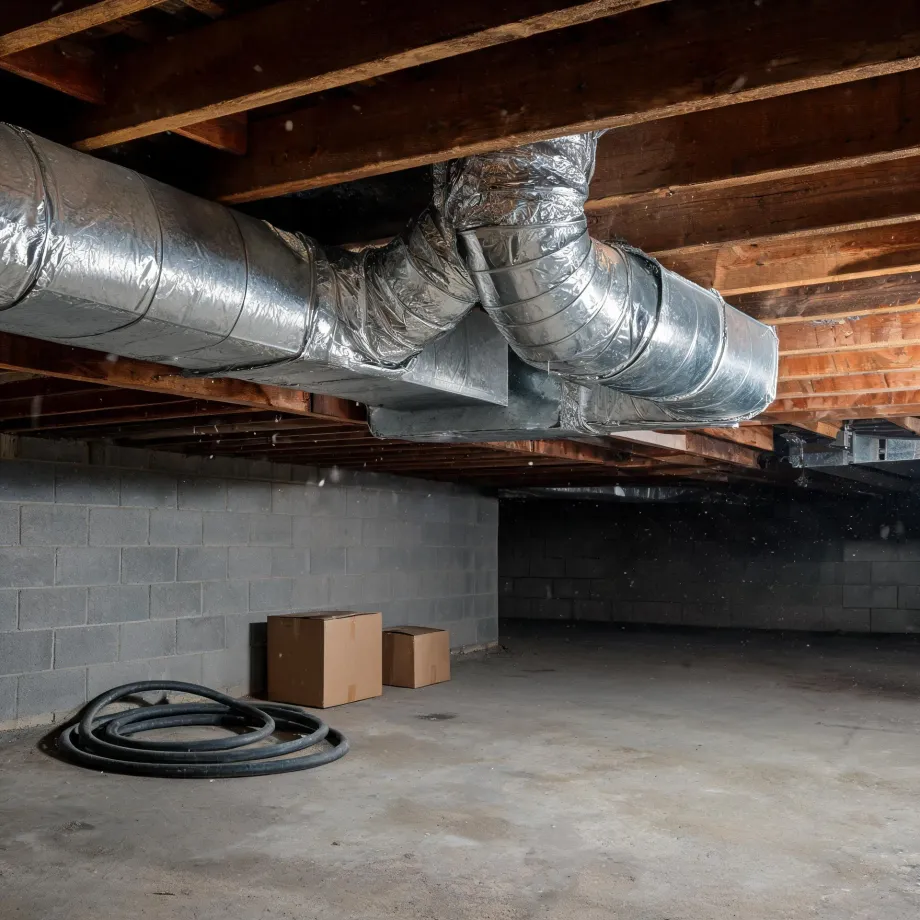
Half the homes in Greene County, Illinois were built in 1957 or earlier (2020-2024 ACS 5-year). Houses built that long ago have been through multiple heating and cooling systems since, and each swap left something behind: ductwork patched and re-routed, refrigerant lines from a previous unit, electrical wiring that has been extended rather than replaced. When a heat pump fails and a contractor opens it, what they find alongside it matters as much as the failed component itself. A capacitor or reversing valve is a known quantity; whether the line set it runs on is the right gauge, or whether the disconnect panel feeding it has been properly updated, is found out on the job. That is where the repair scope either holds or widens.
The Parts of a Heat Pump a Contractor Checks First
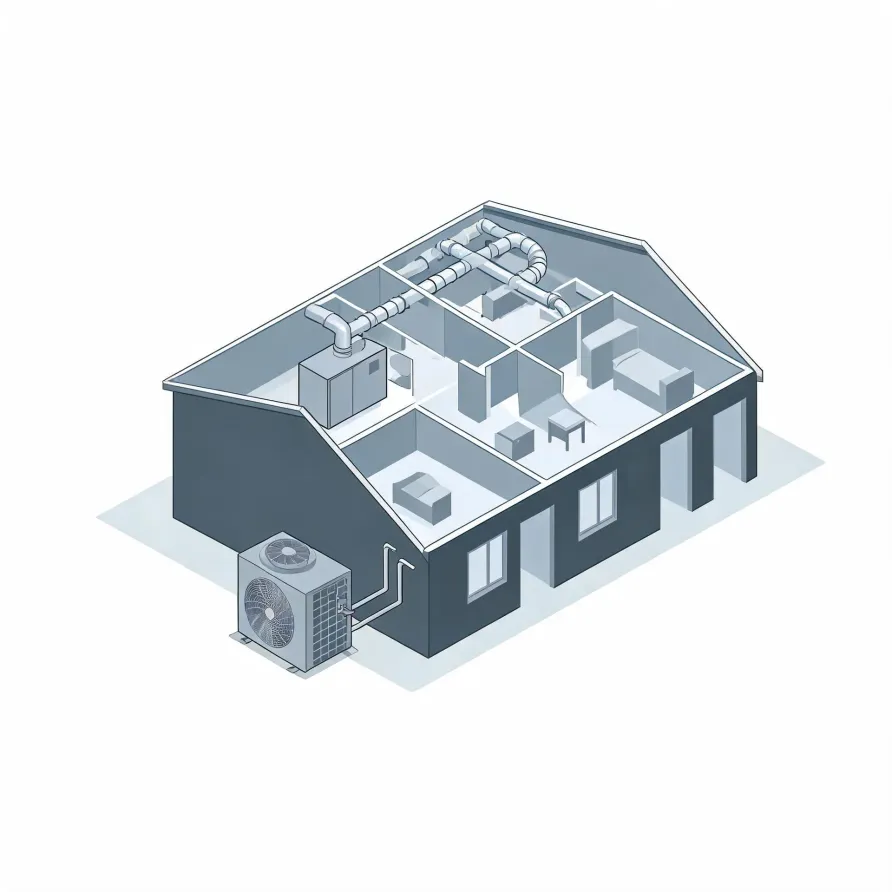
The outdoor unit sits outside the house and holds the compressor and condenser coil, which are the parts a contractor goes to first when a heat pump stops heating or cooling properly. A failed compressor, a refrigerant leak at the coil, or a burned contactor all live here. The indoor air handler, mounted inside a closet, utility room, or attic, pushes conditioned air through the house and carries its own coil and blower motor, both of which are common sources of trouble.
The reversing valve, which is what allows a heat pump to switch between heating and cooling, sits inside the outdoor unit and is a specific suspect when the system runs but delivers the wrong temperature. The expansion valve meters refrigerant between the two coils, and the refrigerant lines running between the outdoor and indoor units carry pressure that a contractor reads to diagnose where the system is losing ground.
The drawing shows a typical heat pump layout, and a licensed contractor determines which parts apply to the specific system and conditions in your home.
Get matched in Greene CountyGreene County, by the record
33 severe weather events were recorded in Greene County, Illinois between 2015 and 2024.
NOAA National Centers for Environmental Information, Storm Events Database, bulk CSV export, events 2015-01-01 through 2024-12-31.Half the homes in Greene County, Illinois were built in 1957 or earlier (2020-2024 ACS 5-year).
U.S. Census Bureau, 2020-2024 American Community Survey 5-Year EstimatesGreene County, Illinois holds 5,785 housing units (2020-2024 ACS 5-year).
U.S. Census Bureau, 2020-2024 American Community Survey 5-Year EstimatesOwners occupy 78.2% of the occupied homes in Greene County, Illinois (2020-2024 ACS 5-year).
U.S. Census Bureau, 2020-2024 American Community Survey 5-Year EstimatesCodes & Standards Governing Heat Pump Repair in Greene County, Illinois1 sourced rules & standards
Licensing and Legal Requirements in Greene County, Illinois
Illinois leaves HVAC licensing to the municipality: state law lets the corporate authorities of each city or village examine, license and regulate heating, air conditioning and refrigeration contractors, and caps the licence fee they may charge at $50 — so who licenses you depends on the town you work in.
Severe Weather Events in Greene County by Year
Weather puts a measurable load on heat pump equipment. The harder a system works to hold indoor conditions against outdoor extremes, the more stress accumulates on its components, and repair needs in Greene County track that pressure directly.
33 severe weather events, 2015–2024. Source: NOAA National Centers for Environmental Information, Storm Events Database.