Tell us about the job
Takes about a minute. No obligation.
A heat pump quoted and sized for Pulaski County is priced around what the install demands, not around a history of severe weather bearing down on it constantly. 69 severe weather events were recorded in Pulaski County, Illinois between 2015 and 2024. At that rate, most systems here have seen relatively few hard events across their working life, so a failing unit is far more likely pointing to how it was originally installed or how long it has been running than to accumulated storm load. A contractor doing new installation work here should establish the right equipment size for the structure and confirm the refrigerant lines and electrical connections are done to spec, because those are the variables that decide how the system performs.
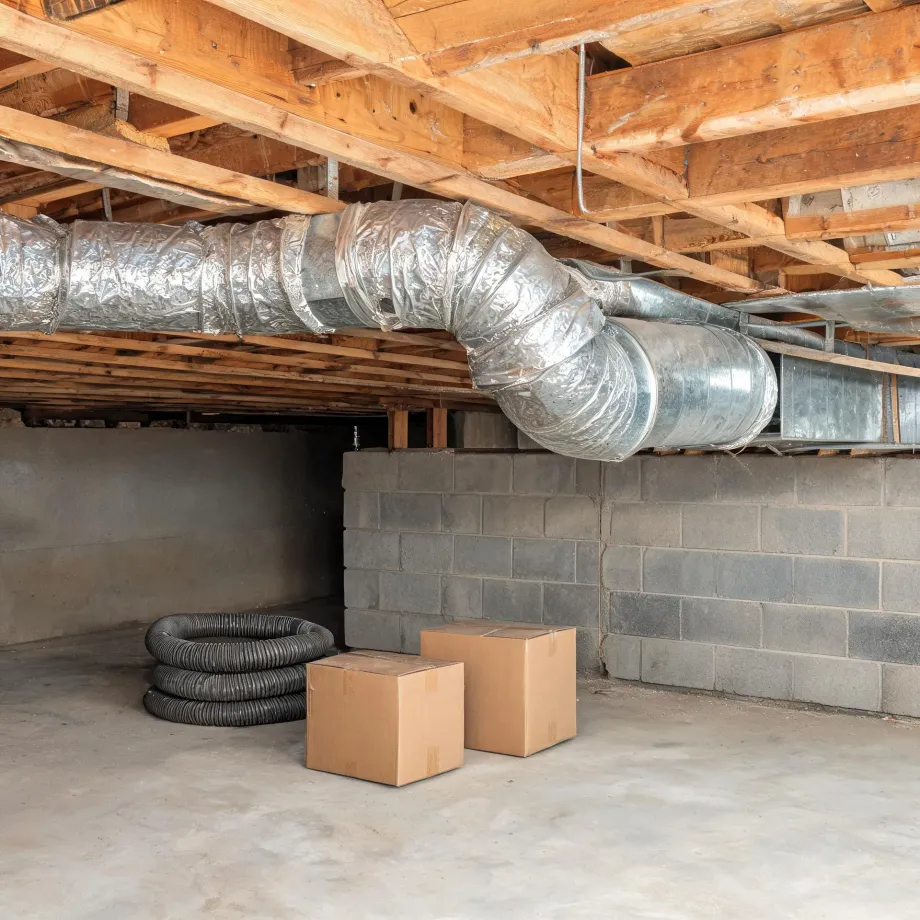
Ductwork sized for a different era of heating runs through a large share of Pulaski County's houses, and whether it moves the volume a heat pump requires is what a contractor has to settle before anything else on an installation job. Half the homes in Pulaski County, Illinois were built in 1969 or earlier (2020-2024 ACS 5-year). That age gap between the building and the equipment matters in a specific way: duct sizing assumptions from that period do not map cleanly onto what a heat pump moves at low temperature differentials, and the electrical service may need evaluation before the new unit can run. A contractor who skips that assessment and prices the unit first is quoting the wrong thing.
What Gets Installed With a New Heat Pump
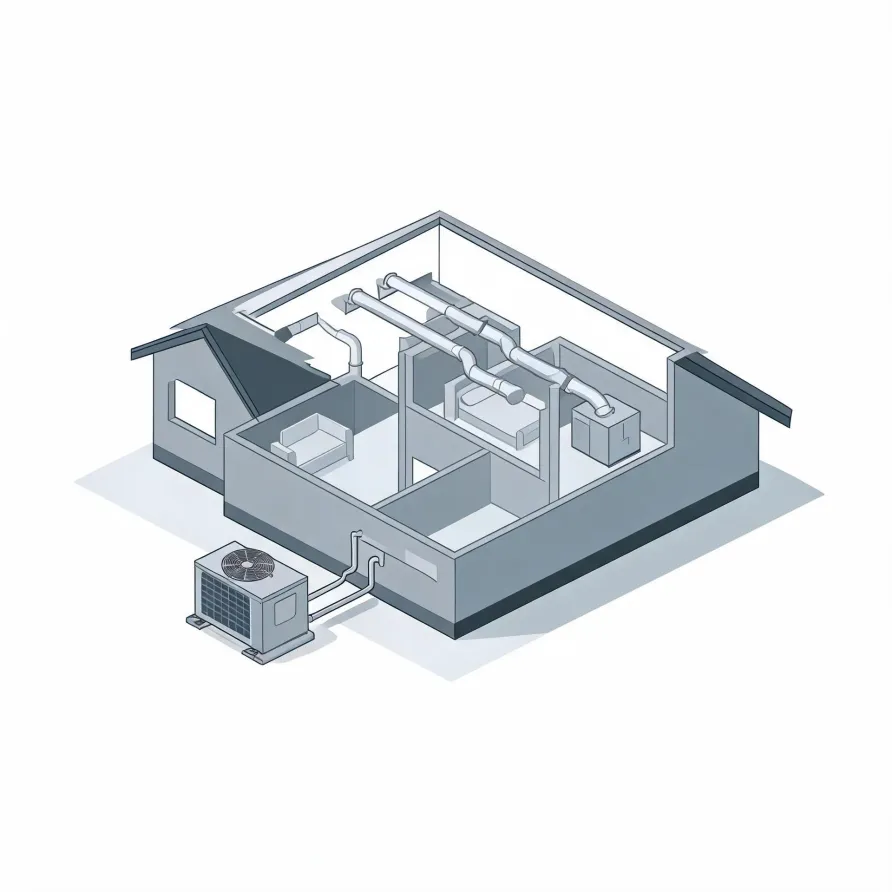
The outdoor unit sits on a pad beside the house and holds the compressor and the condenser coil, the two components that do the heaviest work. Inside, the air handler mounts in a mechanical room, closet, or attic and moves conditioned air through the home. Together these two units make up the core of what a contractor places during a heat pump installation.
A refrigerant line set runs between the outdoor unit and the air handler, connecting the two halves of the system through the wall or floor. The thermostat goes on an interior wall and gives the homeowner control over the whole system. Some installations also include a supplemental electric resistance element inside the air handler to handle the coldest days.
The drawing shows a typical layout, and a licensed contractor determines exactly how each piece fits the conditions of this house.
Get matched in Pulaski CountyPulaski County by the Numbers
69 severe weather events were recorded in Pulaski County, Illinois between 2015 and 2024.
NOAA National Centers for Environmental Information, Storm Events Database, bulk CSV export, events 2015-01-01 through 2024-12-31.Half the homes in Pulaski County, Illinois were built in 1969 or earlier (2020-2024 ACS 5-year).
U.S. Census Bureau, 2020-2024 American Community Survey 5-Year EstimatesPulaski County, Illinois holds 2,851 housing units (2020-2024 ACS 5-year).
U.S. Census Bureau, 2020-2024 American Community Survey 5-Year EstimatesOwners occupy 68.2% of the occupied homes in Pulaski County, Illinois (2020-2024 ACS 5-year).
U.S. Census Bureau, 2020-2024 American Community Survey 5-Year EstimatesHeat Pump Installation Rules for Pulaski County, Illinois1 sourced standards and codes
Licensing Rules for Pulaski County, Illinois
Illinois leaves HVAC licensing to the municipality: state law lets the corporate authorities of each city or village examine, license and regulate heating, air conditioning and refrigeration contractors, and caps the licence fee they may charge at $50 — so who licenses you depends on the town you work in.
Severe Weather Events in Pulaski County
Pulaski County's climate puts real load on heating and cooling equipment, and that load varies with what the weather delivers year to year. A heat pump sized and installed for local conditions handles that workload better than one spec'd to a national average.
69 severe weather events, 2015–2024. Source: NOAA National Centers for Environmental Information, Storm Events Database.