Tell us about the job
Takes about a minute. No obligation.
Sizing a heat pump in McDonough County starts with understanding what the equipment will be running against year after year. 169 severe weather events were recorded in McDonough County, Illinois between 2015 and 2024. At that rate, severe weather is a standing condition of operating here, not an occasional outlier, and a contractor who ignores it when selecting equipment, specifying refrigerant line lengths, or choosing mounting locations will underbuild for the site. A system quoted for a calmer climate gets stressed faster here. The contractor's first job is to match the install to what this area actually delivers.
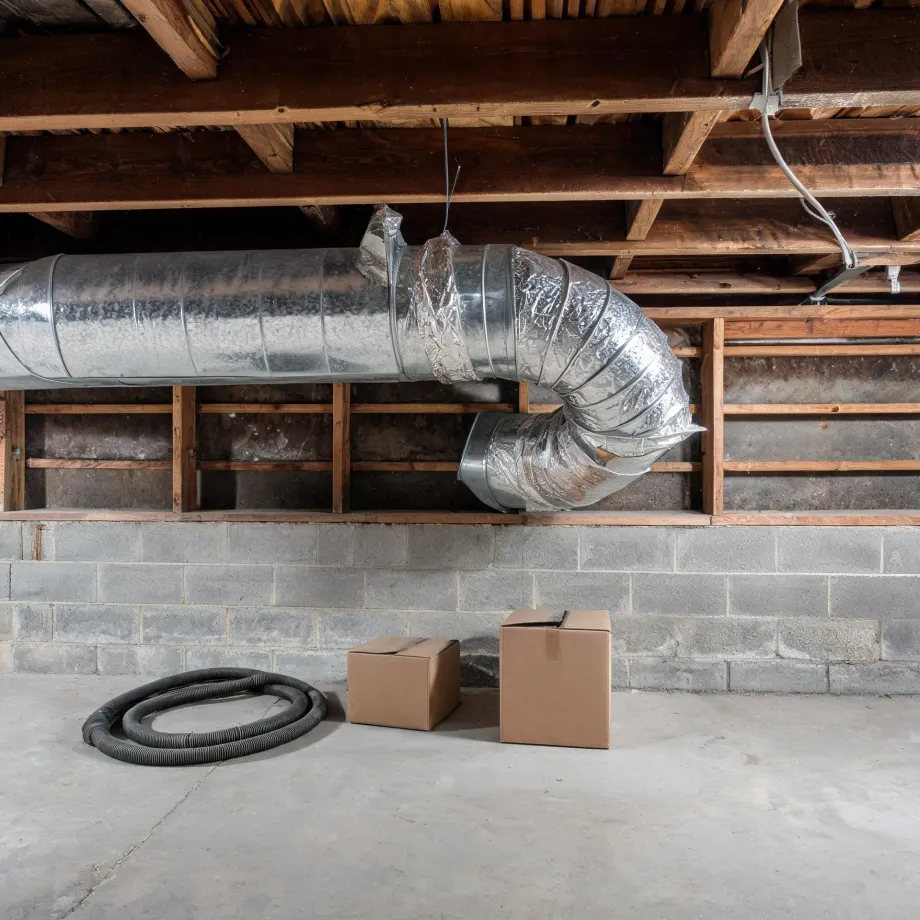
Ductwork laid in for a gas furnace or a boiler handles air at a different velocity and volume than a heat pump needs, and older trunks and runs reflect that. Half the homes in McDonough County, Illinois were built in 1965 or earlier (2020-2024 ACS 5-year). A contractor installing a heat pump into stock like this pulls up floor registers or drops into crawl spaces to check whether the existing distribution will carry the new system's airflow before the equipment order is even placed. The electrical panel gets the same look, since the service that fed the original system may not match what a heat pump draws. The house itself sets the shape of the job.
What Gets Installed With a New Heat Pump
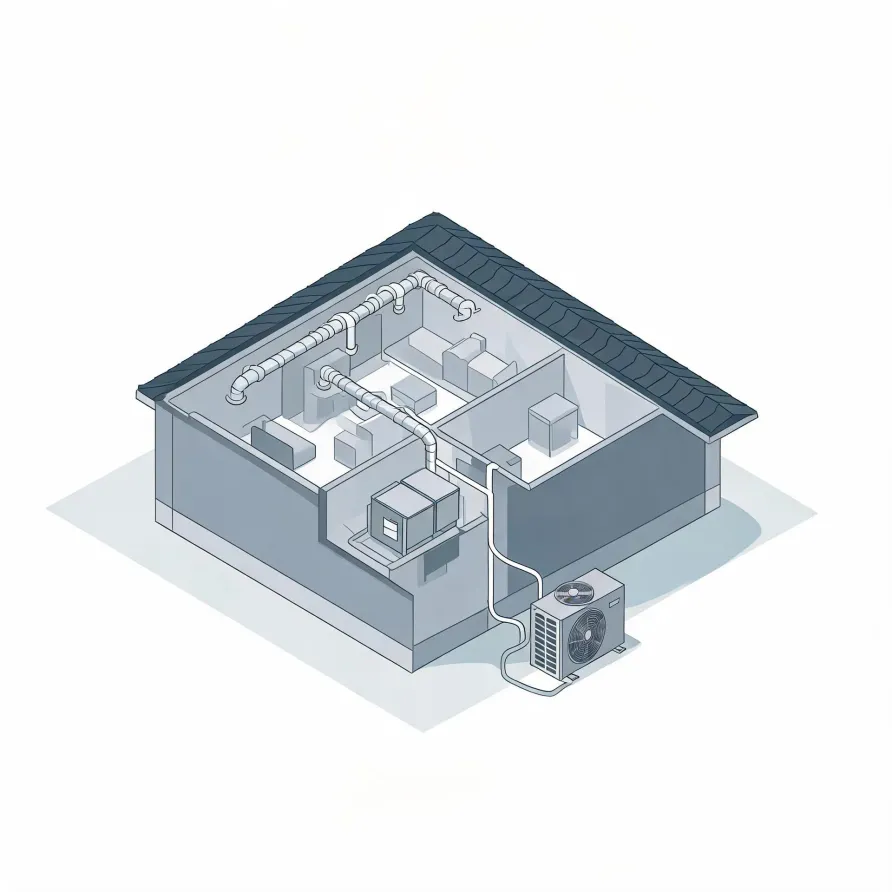
The outdoor unit sits on a pad beside the house and holds the compressor and the condenser coil. The indoor air handler mounts inside, usually in a utility closet, basement, or attic, and pushes conditioned air through the home. Together these two units do the work of both heating and cooling.
A refrigerant line set runs between the outdoor and indoor units, carrying the refrigerant that links both sides of the system. A thermostat goes on an interior wall and gives the homeowner control over the whole setup. A condensate drain line runs from the air handler to a nearby drain to carry off the moisture the system pulls from indoor air.
The drawing shows a typical layout, and a licensed contractor determines exactly how each piece is configured for your house.
Get matched in McDonough CountyMcDonough County, by the numbers
169 severe weather events were recorded in McDonough County, Illinois between 2015 and 2024.
NOAA National Centers for Environmental Information, Storm Events Database, bulk CSV export, events 2015-01-01 through 2024-12-31.Half the homes in McDonough County, Illinois were built in 1965 or earlier (2020-2024 ACS 5-year).
U.S. Census Bureau, 2020-2024 American Community Survey 5-Year EstimatesMcDonough County, Illinois holds 13,587 housing units (2020-2024 ACS 5-year).
U.S. Census Bureau, 2020-2024 American Community Survey 5-Year EstimatesOwners occupy 63.5% of the occupied homes in McDonough County, Illinois (2020-2024 ACS 5-year).
U.S. Census Bureau, 2020-2024 American Community Survey 5-Year EstimatesRules and Standards Governing Heat Pump Installation in McDonough County, Illinois1 sourced rules and standards
Licensing Rules for HVAC Work in McDonough County, Illinois
Illinois leaves HVAC licensing to the municipality: state law lets the corporate authorities of each city or village examine, license and regulate heating, air conditioning and refrigeration contractors, and caps the licence fee they may charge at $50 — so who licenses you depends on the town you work in.
Severe Weather Events in McDonough County
Heating and cooling equipment installed in McDonough County works against whatever the local climate delivers, and local weather history is part of what shapes that workload. A heat pump sized and specified for this area has to hold up to the conditions recorded here, which is why weather data belongs on a page about installation.
169 severe weather events, 2015–2024. Source: NOAA National Centers for Environmental Information, Storm Events Database.