Tell us about the job
Takes about a minute. No obligation.
A contractor quoting a heat pump installation in Wayne County has to account for what the local climate actually asks of the equipment, and the answer shapes decisions about sizing, refrigerant line routing, and how hard the outdoor unit will cycle across a typical year. 85 severe weather events were recorded in Wayne County, Illinois between 2015 and 2024. At that rate, severe weather is a genuine part of operating conditions here, but not so relentless that it overrides every other variable. What a good installation has to get right is load calculation specific to this site, because a system undersized for the real demand will run harder than its design expects and wear accordingly. The weather is a factor; the install is where a contractor controls the outcome.
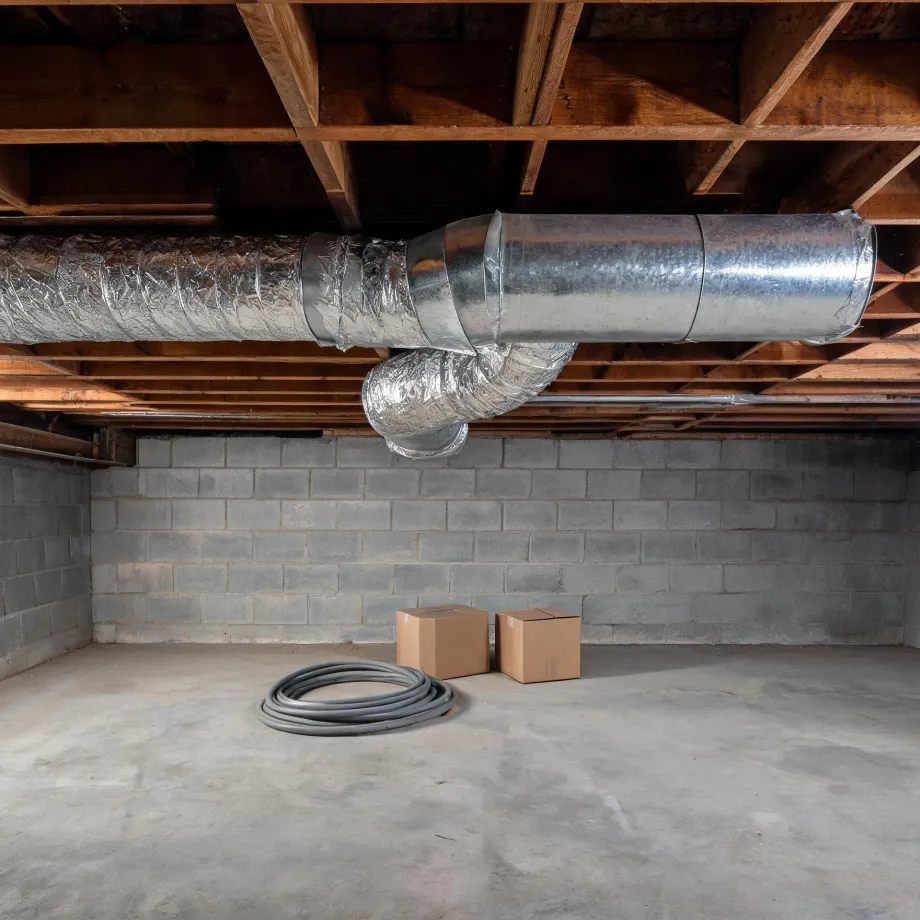
Ductwork laid for a mid-century furnace was sized and routed for a different kind of airflow than a heat pump delivers, and in a county where that era of construction is the norm, it is often the first thing a contractor has to open and assess. Half the homes in Wayne County, Illinois were built in 1974 or earlier (2020-2024 ACS 5-year). That age of construction also means the electrical service in a typical house reflects what was standard then, and a heat pump's draw will be measured against that panel before anything else gets quoted. What a contractor finds in the walls and the breaker box shapes the scope of the job more than the unit selection does.
What Gets Installed With a New Heat Pump
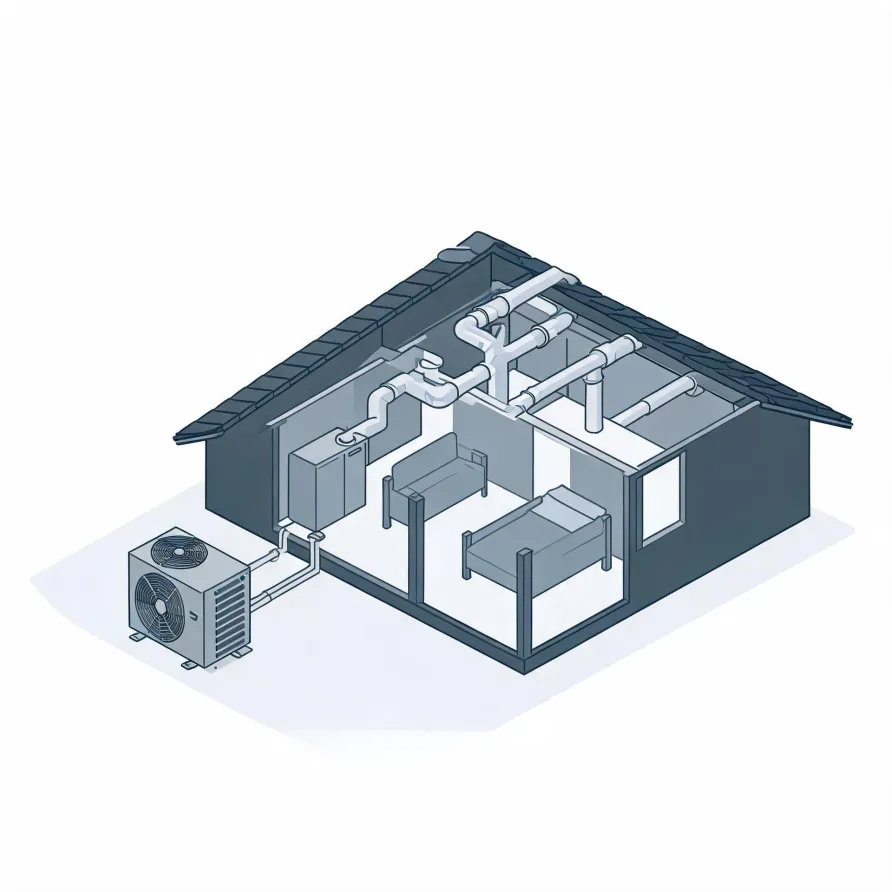
The outdoor unit sits on a pad beside the house and holds the compressor and the coil that pulls heat from outside air. The indoor air handler mounts inside, usually in a closet, basement, or utility room, and circulates conditioned air through the home. These two units are the core of what a contractor places and connects.
A refrigerant line set runs between the outdoor unit and the air handler, carrying refrigerant back and forth through insulated copper tubing. A condensate drain line runs from the air handler to a nearby drain, and a thermostat mounts on an interior wall to control the whole system.
The drawing shows a typical layout, and a licensed contractor determines exactly how each piece is positioned and routed for this house.
Get matched in Wayne CountyWayne County by the numbers
85 severe weather events were recorded in Wayne County, Illinois between 2015 and 2024.
NOAA National Centers for Environmental Information, Storm Events Database, bulk CSV export, events 2015-01-01 through 2024-12-31.Half the homes in Wayne County, Illinois were built in 1974 or earlier (2020-2024 ACS 5-year).
U.S. Census Bureau, 2020-2024 American Community Survey 5-Year EstimatesWayne County, Illinois holds 7,680 housing units (2020-2024 ACS 5-year).
U.S. Census Bureau, 2020-2024 American Community Survey 5-Year EstimatesOwners occupy 78.4% of the occupied homes in Wayne County, Illinois (2020-2024 ACS 5-year).
U.S. Census Bureau, 2020-2024 American Community Survey 5-Year EstimatesCodes & Standards Governing Heat Pump Installation in Wayne County, Illinois1 sourced rules and standards
Licensing and Legal Requirements in Wayne County, Illinois
Illinois leaves HVAC licensing to the municipality: state law lets the corporate authorities of each city or village examine, license and regulate heating, air conditioning and refrigeration contractors, and caps the licence fee they may charge at $50 — so who licenses you depends on the town you work in.
Severe Weather Events in Wayne County
Heating and cooling equipment in Wayne County works against whatever the local climate puts out, and that workload shapes what a system needs to handle over its lifetime. What the weather record looks like here is part of what makes heat pump installation a local decision, not a generic one.
85 severe weather events, 2015–2024. Source: NOAA National Centers for Environmental Information, Storm Events Database.